Introduction: The Darkest Abyss of Human Civilization
Among all the grim chapters of the Second World War, few atrocities were as meticulously organized, as scientifically depraved, or as cynically covered up by post-war Cold War realpolitik as those committed by Unit 731 of the Japanese Kwantung Army (officially camouflaged as the Epidemic Prevention and Water Purification Department).
Operating under the innocuous guise of military sanitation and medical research, this clandestine detachment was the largest state-sponsored biological and chemical warfare research and manufacturing apparatus in human history. For thirteen years, within a heavily guarded fortress in the Pingfang district of Harbin, thousands of human beings were stripped of their names, degraded to the status of inanimate “logs” (maruta), and subjected without anesthesia or moral constraint to lethal vivisections, pathogen inoculations, extreme frostbite tests, and live weapons trials.
Equally egregious was the aftermath: not a single military physician or commanding officer from Unit 731 stood in the dock at the International Military Tribunal for the Far East (the Tokyo Trials). A sordid intelligence bargain struck between Washington and Japanese war criminals allowed the perpetrators to evade justice, leaving human morality and the rule of law profoundly wounded.
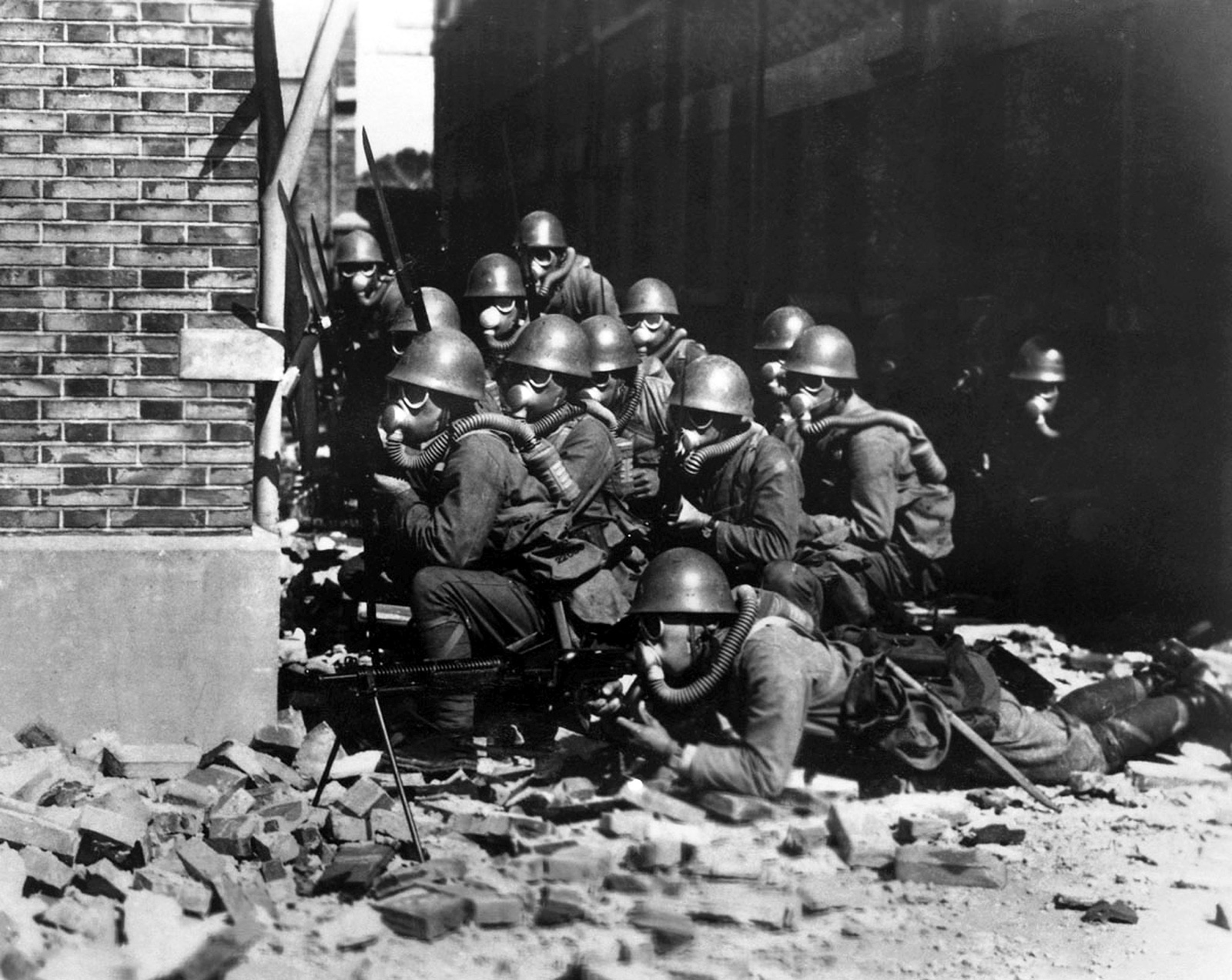 Caption: Archival documentation and remains of the covert Unit 731 compound in Pingfang, Harbin. (Photo credit: CFP)
1. Origins of the Nightmare: Shiro Ishii’s Biowarfare Ambition
Unit 731 was the pathological convergence of Japanese imperialist expansionism and unconstrained medical zealotry.
Following the Mukden Incident of 1931, the Kwantung Army occupied Northeast China. Shiro Ishii, a brilliant yet fanatical microbiologist and army surgeon graduated from Kyoto Imperial University, aggressively lobbied the Imperial Japanese Army General Staff. Ishii argued that biological warfare was the ultimate force multiplier for resource-scarce Japan, reasoning that if the 1925 Geneva Protocol specifically banned biological and chemical agents, it proved their unmatched strategic lethality.
- Establishment of the Complex: In 1932, Ishii founded the covert “Kamo Detachment” in Zhongma Fortress near Harbin. By 1938, operations expanded to Pingfang, twenty kilometers south of Harbin. Requisitioning square kilometers of land and forcing tens of thousands of Chinese laborers into grueling construction, Ishii erected a sprawling, self-contained bioweapons fortress.
- Organizational Structure: Concealed under aliases like “Togo Detachment” and “Manchuria Unit 731,” the facility was organized into eight divisions encompassing pathogen research, mass vaccine synthesis, live human experimentation, chemical gas evaluation, and aerial dispersal bomb design. At its zenith, regular personnel exceeded 3,000 surgeons, scientists, and Kempeitai military police.
Inside this barbed-wire enclave shrouded in perpetual black furnace smoke, subjects were systematically dehumanized. Most were innocent Chinese civilians, anti-Japanese resistance fighters, Soviet Red Army prisoners of war, Russian civilians, Koreans, and Mongolians handed over through the clandestine “Special Transfer” (Tokubetsu Yuso) system.
In official laboratory logs and shifts, victims were referenced solely as “maruta” (logs). In recorded history, not a single person consigned to the cells of the central Ro Block survived.
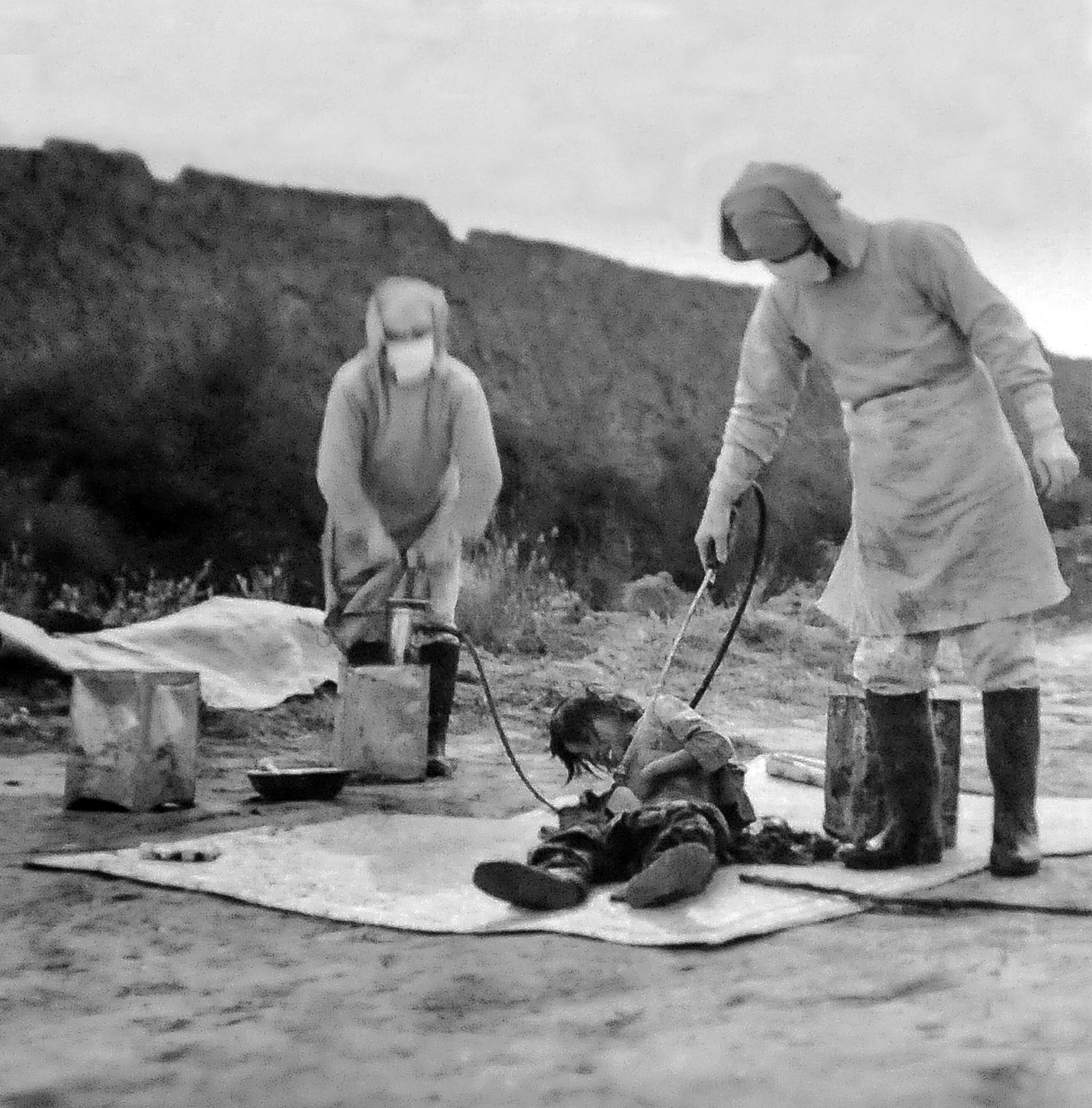 Caption: Unit 731 medical officers culturing virulent pathogens and assembling biological dispersal munitions. (Photo credit: CFP)
2. Inhuman Horrors: Live Vivisection and Barbaric Experiments
The practices of Unit 731 shattered every established boundary of scientific ethics and human decency. Under Ishii’s twisted maxim that “scientific inquiry requires ultimate realism,” medical knowledge was weaponized into instruments of torturous extermination:
Live Unanesthetized Vivisections
To obtain pristine pathological data unaffected by chemical fixatives or anesthetics, Unit 731 physicians routinely cut open the thoracic and abdominal cavities of conscious, screaming victims. Surgeons excised stomachs, livers, and lungs, or dissected vital organs while infected subjects burned with acute plague or cholera fevers to track rapid cellular necrosis. Once the vivisection concluded, dying subjects were terminated by lethal injection or incinerated alive.
Extreme Frostbite and Hypothermia Testing
To prepare the Kwantung Army for potential winter warfare in Siberia, physiologist Hisato Yoshimura orchestrated horrific frostbite experiments. Victims were forced outdoors into sub-zero blizzard conditions reaching −30°C to −40°C with bare extremities submerged in iced water barrels, accelerated by large industrial wind fans.
When limbs froze solid—producing a dry wooden thump when struck with batons—researchers forcibly submerged the frozen extremities into scalding water at 50°C to 60°C. The violent temperature shock caused muscle and skin to slough off instantly, exposing bare bone and nerves as subjects suffered lethal shock.
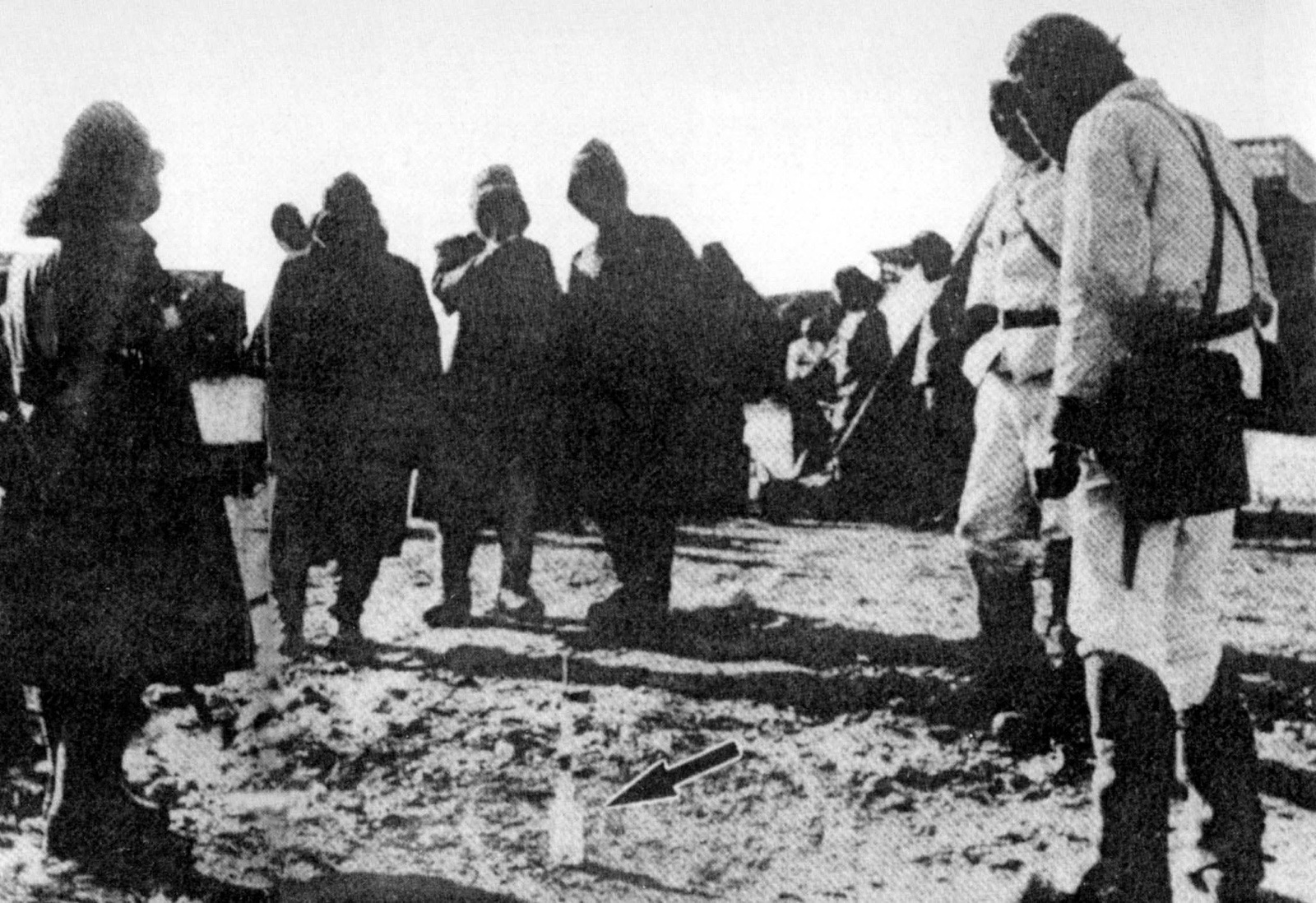 Caption: Archival documentation of low-temperature frostbite testing directed by Hisato Yoshimura. (Photo credit: CFP)
Weaponized Pathogen Inoculation and Aerial Flea Bombs
Pingfang incubators mass-produced billions of Yersinia pestis (plague), Vibrio cholerae, Bacillus anthracis, and Salmonella typhi. Beyond forcing victims to consume contaminated food and water, Ishii developed the porcelain “Uji-type” ceramic bomb. Engineered to fracture with minimal high-explosive force upon aerial detonation, it prevented heat and pressure from killing plague-infested fleas.
At the Anda proving ground, dozens of naked prisoners were strapped to wooden stakes spaced across open fields. Bombers made low passes dropping porcelain anthrax and plague flea munitions, directly measuring kill radii and infection rates against tethered living humans.
Chemical Gas Chambers and Ballistic Testing
Inside hermetically sealed glass chambers, subjects were exposed to lethal concentrations of mustard gas, lewisite, phosgene, and hydrogen cyanide while doctors with stopwatches recorded the precise moments of pulmonary hemorrhage, severe skin blistering, and asphyxiation. On firing ranges, living subjects were lined up behind varied barricades to calibrate shrapnel fragmentation from experimental grenades and the penetration depth of rifle rounds.
3. The Pan-Asian Web of Terror: A Coordinated Biowarfare Machine
Unit 731 was not an isolated aberration. It served as the central node of a vast, coordinated network of biological warfare detachments spanning Japanese-occupied China and Southeast Asia:
| Detachment | Official Military Designation | Base of Operations | Strategic Role and Documented Crimes |
|---|---|---|---|
| Unit 731 | Kwantung Army Epidemic Prevention Dept. | Pingfang, Harbin | Central command, mass pathogen cultivation, and primary human vivisection hub (3,000+ staff). |
| Unit 1855 | North China Area Army Epidemic Prevention Dept. | Temple of Heaven, Beijing | Stationed near Peking Union Medical College; focused on North China pathogen trials and vivisections. |
| Unit Ei 1644 | Central China Expeditionary Army Epidemic Dept. | Former Central Military Hospital, Nanjing | Also known as “Tama Detachment”; mass human trials on cholera, typhus, and operational deployments. |
| Unit Nami 8604 | South China Area Army Epidemic Prevention Dept. | Zhongshan Medical College, Guangzhou | Deliberately poisoned refugee camps with typhoid and cholera, murdering tens of thousands of civilians. |
| Unit 100 | Kwantung Army Horse Epidemic Prevention Dept. | Mengjiatun, Changchun | Camouflaged as veterinary unit; specialized in agricultural biowarfare targeting livestock and crops. |
| Unit 9420 | Southern Expeditionary Army Epidemic Dept. | Outram Road General Hospital, Singapore | Headquartered biowarfare operations across Malaya, Indonesia, the Philippines, Thailand, and Burma. |
At the network’s height in 1939, Ishii’s collective biowarfare organization commanded over 10,000 scientists, technicians, and military personnel.
This machinery was not confined to laboratory walls. Between 1940 and 1944, Units 731 and 1644 launched extensive field operations against Chinese cities. Aircraft sprayed ceramic canisters filled with plague fleas, wheat grains, and cotton wadding over Ningbo, Quzhou, Jinhua, and Changde. These operations triggered localized catastrophic epidemics. Post-war historical research conservatively estimates that Japanese biological attacks claimed the lives of more than 300,000 Chinese civilians.
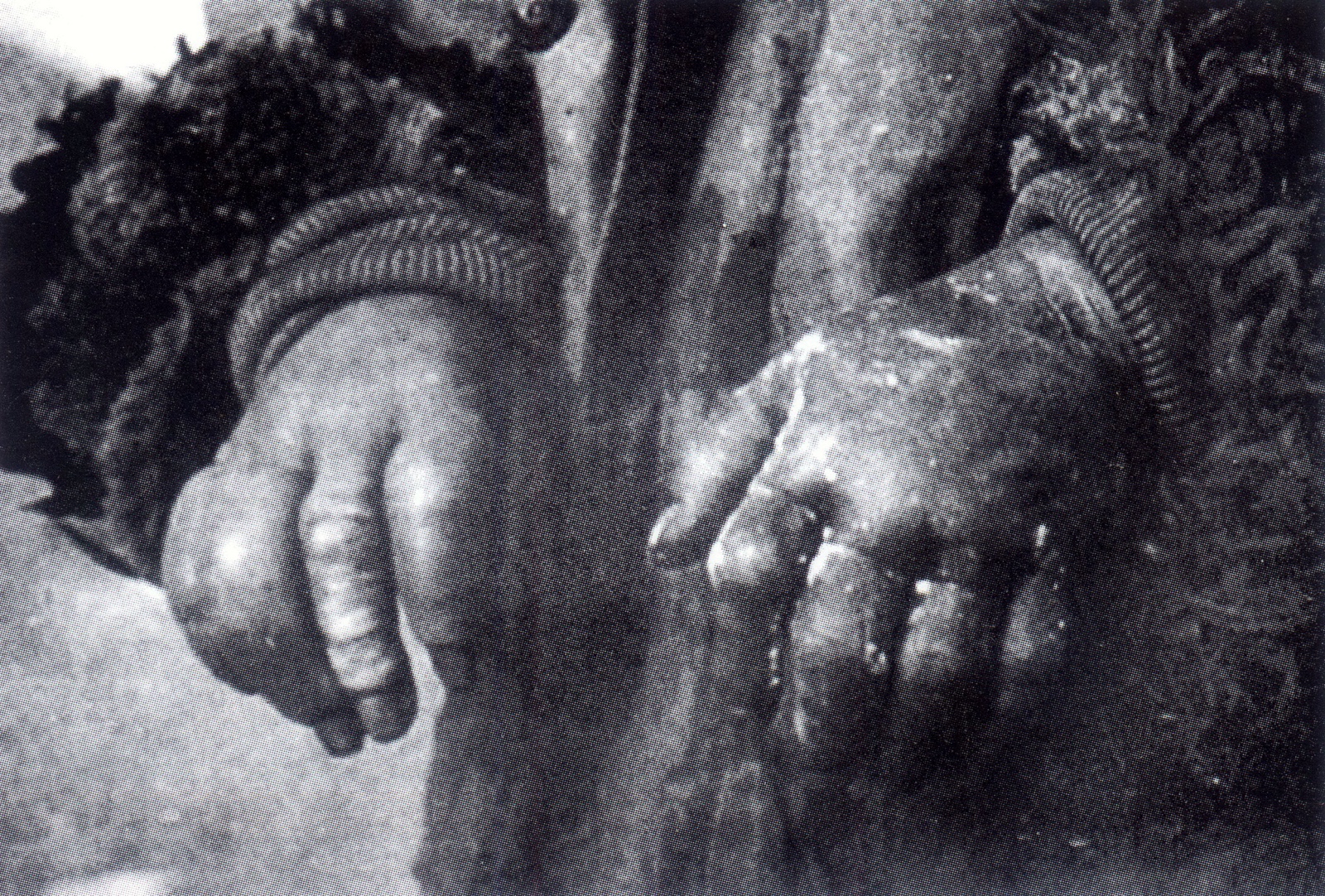 Caption: Reconstructed scene of the Anda field testing ground, where victims were tethered to stakes to test live ceramic anthrax bombs. (Photo credit: CFP)
4. Total Obliteration: The Destruction of Evidence in August 1945
On August 9, 1945, the Soviet Red Army launched a massive offensive into Manchuria, crushing the Kwantung Army.
Anticipating total collapse, Ishii moved ruthlessly to erase all traces of the complex. On August 10, Ishii issued urgent executive orders:
- Immediate Execution of All Detainees: Cyanide gas and potassium cyanide were used to poison all remaining “maruta” in the cellblocks. The corpses were drenched in fuel, burned in underground pits, and remaining bones crushed and dumped into the Songhua River.
- Demolition of the Pingfang Compound: Combat engineers deployed tons of dynamite over several days, systematically demolishing laboratories, incinerators, and prison blocks.
- Absolute Gag Orders: All retreating personnel were ordered to return to mainland Japan under strict orders to “take the secrets to their graves,” under penalty of summary execution.
In their frantic retreat, the unit released tens of thousands of plague-infected laboratory rodents into surrounding fields, sparking virulent post-war outbreaks that plagued Harbin residents for years.
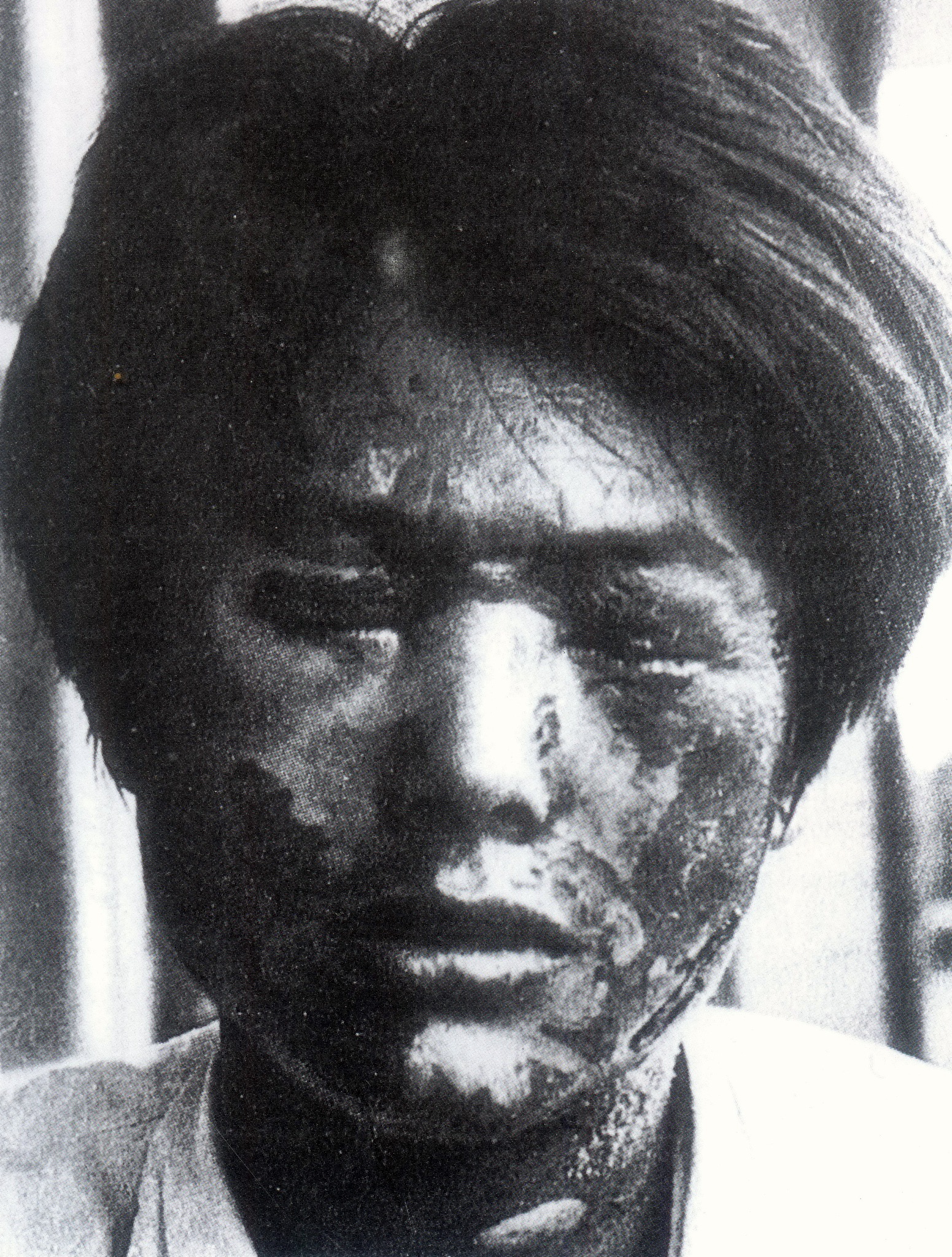 Caption: Shattered brickwork of the Pingfang complex after Japanese sappers detonated the site in August 1945 to destroy incriminating evidence. (Photo credit: CFP)
5. The Immunity Bargain: Cold War Realpolitik and Denied Justice
The most bitter and morally bankrupt chapter unfolded during the post-war trials.
Following Japan’s unconditional surrender, General Douglas MacArthur’s Supreme Commander for the Allied Powers (SCAP) dispatched biowarfare investigators, including Dr. Norbert Fell and Dr. Dahlbert Hill, to interrogate Ishii and his inner circle in Japan.
With the Cold War intensifying against the Soviet Union, the U.S. Chemical Corps and the Pentagon coveted Unit 731’s data on human pathogen tolerance, lethal aerosol dispersal curves, and hypothermia recovery—data that could never be lawfully obtained in any civilized nation:
- Ishii, Masaji Kitano, and their deputies surrendered thousands of detailed pathology notebooks, tissue slides, and autopsy reports covering thousands of human experiments.
- In return, General MacArthur and the U.S. government granted complete legal immunity from war crimes prosecution.
At the International Military Tribunal for the Far East (1946–1948), all evidence regarding Unit 731 was deliberately suppressed. Not a single member of Ishii’s detachment was indicted for crimes against humanity.
Shielded by this immunity pact, Unit 731’s physicians integrated seamlessly into post-war Japanese society. Leveraging research obtained through the slaughter of Chinese and Allied victims, they became esteemed university deans, professors of medicine, heads of the National Institute of Infectious Diseases, and senior executives of pharmaceutical conglomerates like Green Cross Corporation. Only the Soviet Union, at the 1949 Khabarovsk War Crime Trials, convicted twelve captured Kwantung Army officers, while the primary mastermind, Shiro Ishii, lived peacefully until his death in 1959.
Conclusion: Bearing Witness Against Historical Erasure
The atrocities of Unit 731 were not mere excesses of wartime brutality. They represented the total collapse of medical ethics under state totalitarianism, transforming science into an instrument of mechanized slaughter.
Today, as revisionist voices attempt to downplay or whitewash these historical realities, our enduring responsibility is to anchor these documented facts firmly in human memory.
Remembering the 3,000 souls reduced to ash in the Pingfang incinerators, and the hundreds of thousands extinguished by biological warfare across Asia, is not about perpetuating animosity. It is an indispensable stand for human dignity: no crime committed against humanity under the banner of national security or scientific progress can ever be granted moral absolution.
深度紀實與歷史焦點問答
QWhy were victims of Unit 731 referred to as 'logs' (Maruta)?
It was a dehumanizing euphemism employed by the Imperial Japanese Army to strip victims of their personhood and conceal the classified compound. Under the guise of a 'lumber mill' in Pingfang, Harbin, Japanese military police and operatives referred to imprisoned Chinese civilians, resistance fighters, Russians, and Koreans as inanimate timber, noting human deaths in official logs as 'consumed maruta'.
QWhat specific medical experiments were conducted on live human subjects?
Experiments included unanesthetized vivisections with organ removal; forced infection with lethal pathogens like plague, cholera, anthrax, and typhoid; extreme sub-zero frostbite tests involving skin avulsion in boiling water; gas chamber trials testing mustard and phosgene gas lethality; and open-air proving ground tests at Anda using ceramic plague-flea bombs against tethered human subjects.
QWhy were Shiro Ishii and top Unit 731 commanders never prosecuted at the Tokyo Trials?
Due to Cold War geopolitical calculations. Following Japan's surrender in 1945, the Supreme Commander for the Allied Powers (SCAP) under General Douglas MacArthur struck a clandestine pact with Ishii: in exchange for complete autopsy slides, pathology records, and biological weapon data derived from human vivisections, the U.S. granted blanket legal immunity, shielding Unit 731 personnel from prosecution for war crimes and crimes against humanity.
權威引用與參考文獻
- 1.Khabarovsk War Crime Trials: Record of the Trial of Former Japanese Military Personnel(發行:National Development Council Archives Administration)
- 2.Museum of Evidence of War Crimes by Japanese Army Unit 731: Pingfang Archives and Victim Records(發行:Academia Historica)
- 3.U.S. National Archives and Records Administration (NARA): Record Group 331, GHQ/SCAP Investigation into Unit 731(發行:National Archives and Records Administration)