On the morning of March 16, 1968 (ROC Year 57), in the aftermath of the Tet Offensive, there were no Viet Cong guerrillas waiting in ambush at the village of My Lai in South Vietnam’s Quang Ngai Province—only unarmed elders, women, and infants. Advancing into the hamlet, Charlie Company of the U.S. Army’s 23rd Infantry Division carried out a four-hour, one-sided massacre that left more than 500 civilians dead.
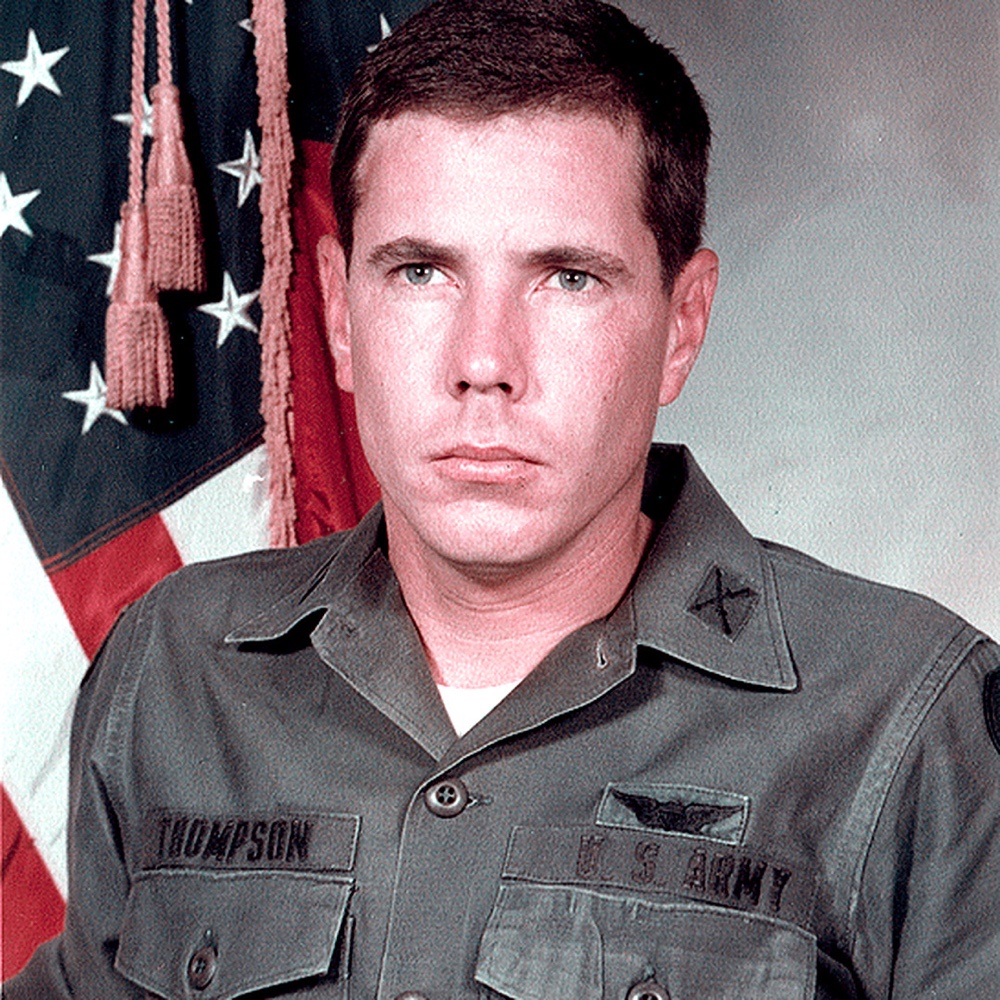
It was not a tragic battlefield misfire; it was the collective breakdown of a state violence machine stripped of restraint. Amid that madness and blind obedience, the only person who slammed on the brakes was a 24-year-old reconnaissance helicopter pilot: Hugh Thompson Jr.
1. Defying the Chain: Aiming an M-60 at Fellow Americans
That morning, Thompson, door gunner Lawrence Colburn, and crew chief Glenn Andreotta flew their OH-23 observation helicopter low over My Lai. They marked several wounded civilians with smoke to request medical aid from ground troops—only to fly back and discover that those wounded villagers had been executed at point-blank range.
Thompson watched an American officer walk up to an injured young woman and pull the trigger.
“It was our own people doing the killing,” Colburn later recalled. Thompson immediately radioed the atrocity, then spotted eleven terrified Vietnamese civilians fleeing toward a crude bunker with American soldiers closing in behind them.
Thompson did not ask for permission from headquarters or wait for military justice. He landed his helicopter directly between the U.S. soldiers and the villagers, physically cutting off the line of fire, and gave Colburn an order that could have sent them both to a court-martial:
“Keep your M-60 trained on those American guys. If they open fire on the villagers, you open fire on them.”
Stepping out of the aircraft, Thompson confronted a higher-ranking platoon leader face to face. He coaxed the eleven panicking civilians out of the bunker and called in another helicopter to evacuate them to safety. Returning to the air, the crew spotted faint movement in an irrigation ditch piled with bodies. Thompson landed again; Andreotta waded into the corpses and pulled out a surviving young boy, Do Ba, rushing him to a hospital.
“I had a son at home about his age,” Thompson offered as his simplest explanation. Tragically, just three weeks later on April 8, 1968, 20-year-old Andreotta was killed in action, never living to see the belated justice.
2. A Hush-Money Medal and Thirty Years of Retaliation
After Thompson flew back to base and furiously reported what he had seen, senior commanders finally ordered the killing to stop. Yet the military bureaucracy’s first instinct was not accountability—it was cover-up.
The U.S. Army swiftly awarded Thompson a Distinguished Flying Cross with a fabricated citation praising his heroism in rescuing a child amid “intense crossfire.” Seeing straight through the public-relations stunt, Thompson threw the medal into the trash.
“It was just to shut me up,” he said coldly.
When independent journalist Seymour Hersh exposed the My Lai Massacre in 1969 and Congress launched hearings, Thompson testified truthfully under oath. Whistleblowers rarely become heroes overnight. For the next thirty years, he was shunned by fellow servicemen, publicly questioned for his loyalty by lawmakers such as House Armed Services Committee Chairman Mendel Rivers, and subjected to death threats—including mutilated animal carcasses left on his doorstep.
The institution used honors to buy silence and isolation to punish honesty. In the end, only platoon leader William Calley was convicted by court-martial, serving roughly three and a half years under house arrest before receiving clemency, while the man who stopped the slaughter carried the stigma of a traitor for decades.
3. A Thirty-Year-Late Medal Cannot Wash Away Institutional Complicity
Not until March 6, 1998—thirty years after the massacre—did the U.S. Army gather at the Vietnam Veterans Memorial in Washington to award the Soldier’s Medal to Thompson, Colburn, and posthumously to Andreotta, the Army’s highest honor for bravery not involving direct combat with an enemy.
Later that month, Thompson and Colburn returned to My Lai and reunited with survivors from the bunker. Facing long-overdue applause, Thompson showed no pride: “I just wish our crew could have saved more people that day, not just the ones we did.”
| Date | Key Event |
|---|---|
| March 16, 1968 | My Lai Massacre occurs; Thompson’s crew lands between U.S. troops and villagers, saving 11 civilians and boy Do Ba |
| April 8, 1968 | Crew chief Glenn Andreotta is killed in action in Vietnam |
| 1969 | Investigative reporting exposes My Lai; Thompson testifies before Congress and faces decades of retaliation |
| March 6, 1998 | U.S. Army awards the Soldier’s Medal to Thompson, Colburn, and Andreotta in Washington |
| January 6, 2006 | Hugh Thompson Jr. passes away at age 62 |
4. Conclusion: When Obedience Becomes Supreme Morality
Hugh Thompson Jr. died of cancer on January 6, 2006, at the age of 62. The enduring question he leaves behind is not how brutal war can be, but whether an institution still leaves room for common sense and conscience when “obeying orders” and “collective loyalty” become absolute virtues. When everyone pulls the trigger in the direction of power, the one person who turns the gun on his own often has to endure the hostility of an entire nation before history finally catches up.
深度紀實與歷史焦點問答
QWhat did Hugh Thompson Jr. do during the My Lai Massacre?
On March 16, 1968, 24-year-old OH-23 reconnaissance pilot Hugh Thompson Jr. witnessed U.S. troops executing Vietnamese civilians, landed his helicopter between American soldiers and 11 fleeing villagers, ordered gunner Lawrence Colburn to aim his M-60 at U.S. troops if they fired, and rescued a surviving boy from an irrigation ditch.
QWhy did Thompson throw away his Distinguished Flying Cross?
The U.S. Army awarded Thompson the Distinguished Flying Cross with a fabricated citation claiming he rescued a child amid 'intense crossfire.' Recognizing it as a cover-up designed to buy his silence, Thompson threw the medal in the trash.
QWhen were Thompson and his crew officially honored?
After three decades of ostracism, congressional hostility, and death threats, the U.S. Army awarded the Soldier's Medal to Thompson, Colburn, and posthumously to Glenn Andreotta at the Vietnam Veterans Memorial on March 6, 1998.
權威引用與參考文獻
- 1.U.S. National Archives: My Lai Massacre Records and Peers Inquiry(發行:U.S. National Archives)
- 2.Encyclopædia Britannica: My Lai Massacre & Hugh Thompson Jr.(發行:Encyclopædia Britannica)
- 3.Library of Congress: Vietnam War Veterans History Project(發行:Library of Congress)